
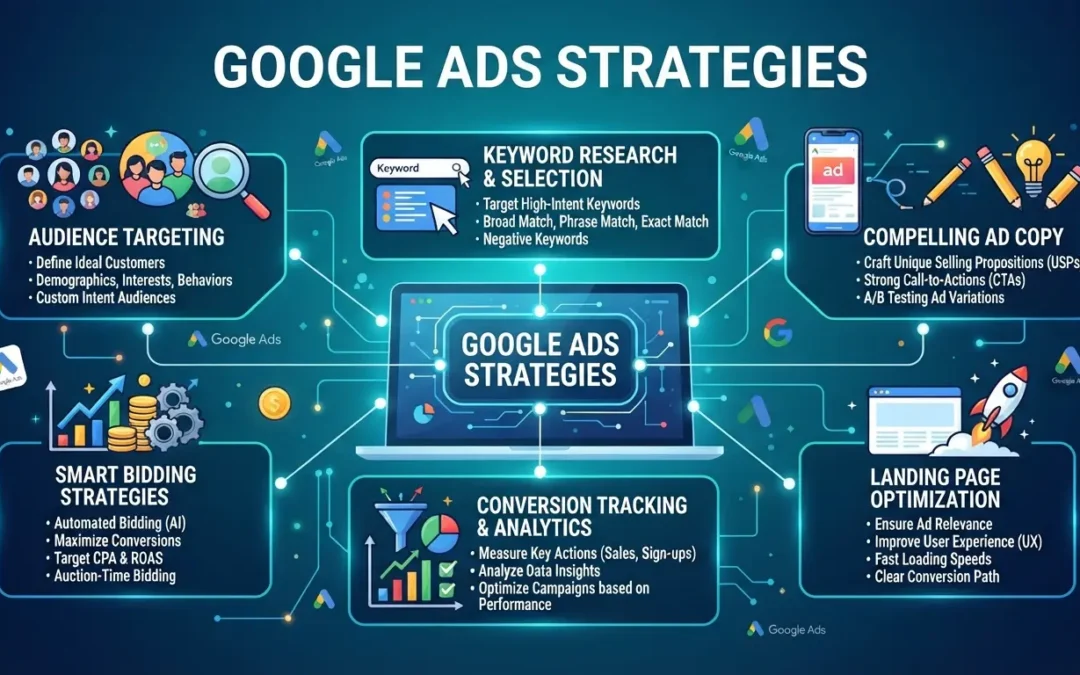
Google Ads, the advertising platform formerly known as Google AdWords, lets businesses display ads across Search, YouTube, Display, and other Google properties. You only pay when someone engages with your ad, which makes careful targeting especially powerful.
In this guide you will learn clear, practical strategies that help you build effective campaigns, refine your audience, and maximize ROI. The tone stays straightforward and supportive so you can apply each idea with confidence.
Why Precision Targeting Matters for ROI
Precision targeting means showing your ads to people who match your ideal customer profile based on location, demographics, interests, past behavior, and search intent. When your message reaches the right person at the right moment, click-through rates rise, conversion rates improve, and cost per acquisition drops.
Broad targeting often leads to clicks from people who will never become customers. Those clicks still cost money. Precision targeting filters out most of that noise. You spend more of your budget on high-intent users, which directly supports stronger return on ad spend.
Many advertisers notice meaningful improvements once they tighten audience signals and negative keywords. The key is starting with solid data and refining over time rather than making drastic changes all at once.
Start with Accurate Conversion Tracking
Every optimization decision depends on reliable data. Set up conversion tracking for the actions that truly matter to your business—form submissions, phone calls, purchases, or qualified leads. Use Google Analytics 4 and enhanced conversions when possible so the system receives accurate signals.
Without clean tracking, Smart Bidding strategies cannot learn effectively. Take time at the beginning to verify that conversions fire correctly. This foundation supports everything that follows and protects your budget from optimizing toward the wrong goals.
Build a Strong Keyword Foundation
Keywords remain central to Search campaigns. Focus on terms that signal clear commercial intent. Phrases that include words such as “buy,” “hire,” “near me,” or specific service names usually convert better than broad informational queries.
Match types give you control over reach and relevance. Exact match works well for your highest-value terms where precision matters most. Phrase match captures useful variations while staying closer to your core meaning. Broad match can help discovery, but pair it with Smart Bidding and a solid negative keyword list so the system stays disciplined.
Review the Search Terms report regularly. Add irrelevant queries as negative keywords. This simple habit often cuts wasted spend by a noticeable percentage within the first few weeks and frees budget for terms that actually perform.
Layer Audience Signals for Greater Precision
Google Ads offers multiple ways to refine who sees your ads. Demographic targeting lets you focus on age ranges, gender, parental status, or household income where available. These filters help you avoid audiences that fall outside your ideal customer profile.
Audience segments add another layer of insight. In-market audiences reach people actively researching products or services like yours. Affinity audiences connect with users who show long-term interest in related topics. Custom segments and Customer Match lists let you use your own first-party data—email lists, website visitors, or past purchasers—for highly relevant targeting.
Remarketing lists remain one of the highest-ROI options. Segment them thoughtfully. Cart abandoners, pricing-page visitors, and past customers often respond to different messages and bid adjustments. Start with observation mode when testing new audiences so you can gather data without restricting reach too early.
Location targeting deserves careful attention. Choose presence rather than interest when your business serves a defined geographic area. Radius targeting around key locations or postal codes can further tighten focus for local services.
Choose Bidding Strategies That Match Your Goals
Smart Bidding uses real-time signals such as device, location, time of day, and audience membership to set bids for each auction. Once you have enough conversion data often around 30 conversions in a recent period—strategies like Target CPA or Target ROAS become powerful tools.
Target CPA works well when most conversions carry similar value. Target ROAS suits situations where conversion values differ, such as e-commerce. Start with targets close to your recent actual performance, then adjust gradually. Setting an overly aggressive target can limit delivery and slow learning.
Maximize Conversions or Maximize Conversion Value can help during the early data-gathering phase. Move to target-based strategies once performance stabilizes. Monitor results closely and avoid frequent target changes so the algorithm has time to adapt.
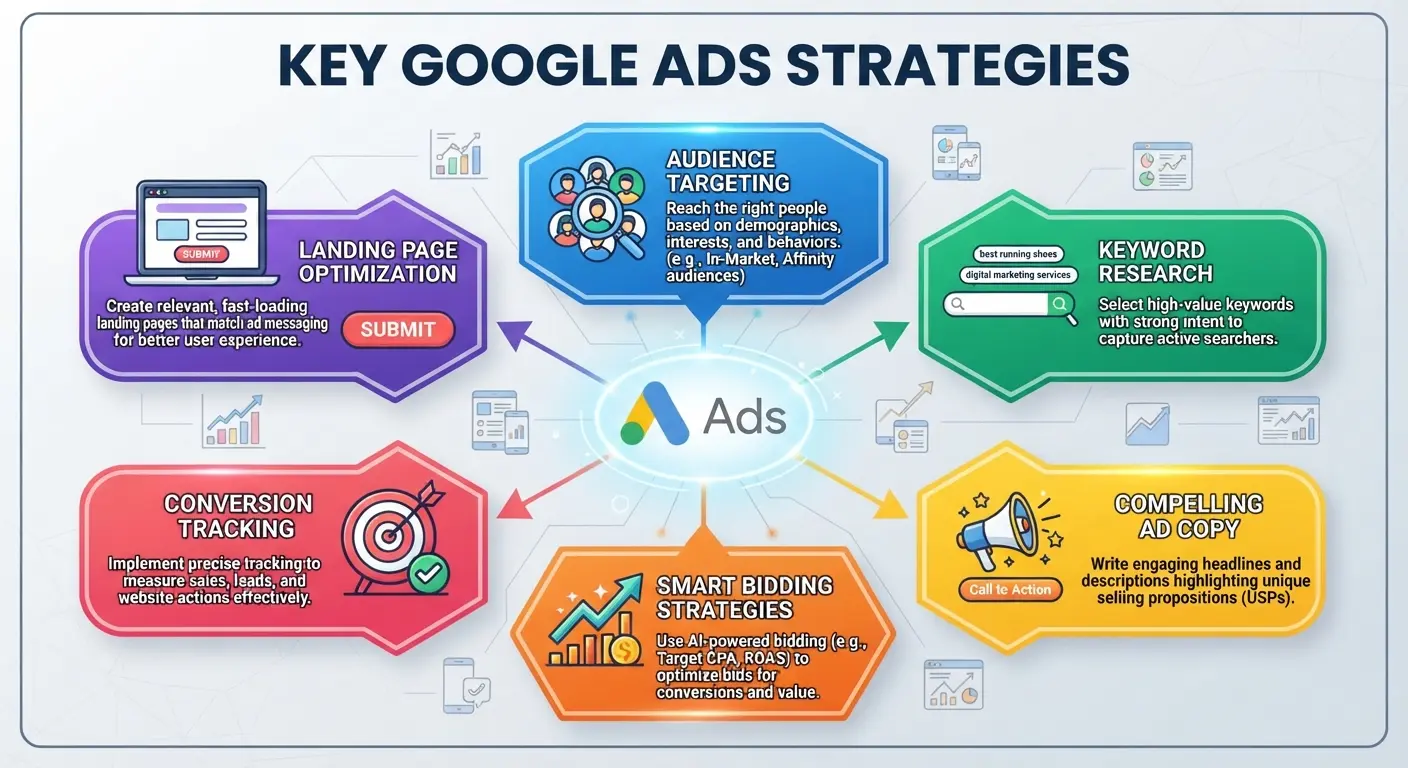
Align Ads and Landing Pages with Intent
High relevance improves Quality Score, which can lower cost-per-click and improve ad position. Write ad copy that mirrors the language and intent of your target keywords. Responsive Search Ads allow Google to test combinations of headlines and descriptions, so provide a strong variety of relevant assets.
Landing pages should continue the conversation started by the ad. Match the offer, keep the page focused, and make the next step obvious. Fast load times, clear mobile experience, and simple forms all support higher conversion rates. When the ad promise and the page experience feel consistent, users convert more readily and your ROI benefits.
Use Performance Max Thoughtfully
Performance Max campaigns reach users across Google’s inventory using machine learning. They work best when you supply high-quality first-party data, strong creative assets, and clear conversion goals. Treat audience signals and search themes as helpful guidance rather than strict limits. The system can expand beyond them when it finds stronger conversion opportunities.
Structure asset groups around meaningful themes and feed the campaign accurate conversion data. This approach shortens the learning period and supports better efficiency over time.
Monitor, Test, and Refine Continuously
Successful campaigns improve through steady observation rather than one-time setup. Check performance reports weekly. Look for patterns in search terms, audience segments, devices, and locations. Pause underperforming elements and expand what works.
A/B testing ad copy, landing page elements, and audience layers reveals what resonates with your specific audience. Make one meaningful change at a time so you can clearly see the impact. Quality Score improvements, tighter negative keyword lists, and better landing page relevance often deliver quick wins without increasing budget.
Summary Block
Precision targeting turns Google Ads from a broad spending tool into a focused growth engine. Accurate conversion tracking, thoughtful keyword and match-type choices, layered audience signals, appropriate bidding strategies, and consistent ad-to-landing-page relevance form the core of effective campaigns. Regular monitoring and negative keyword hygiene protect your budget while Smart Bidding and first-party data help the system improve over time. When you focus spend on high-intent users, return on investment rises in a sustainable way.
These strategies work across many business types. Start with the foundations that matter most for your current data maturity, then layer on more advanced tactics as results grow. Small, consistent improvements compound into stronger performance.
Ready to put these ideas into practice with expert guidance? Visit Invade Marketing or schedule a conversation through the free consultation page. A clear plan tailored to your goals can help you move forward with confidence.
Frequently Asked Questions
What is the best way to start improving Google Ads ROI?
Begin with accurate conversion tracking and a thorough review of your Search Terms report. Adding negative keywords and tightening match types often reduces wasted spend quickly and creates room for better-performing traffic.
How does precision targeting differ from broad targeting?
Precision targeting uses demographics, audiences, location, and intent signals to reach people more likely to convert. Broad targeting reaches larger audiences but frequently includes users with low purchase intent, which can lower overall efficiency.
When should I switch to Target CPA or Target ROAS?
These strategies work best after you have a steady flow of conversions—often around 30 or more in a recent period—and reliable value tracking. Start targets near your current performance and adjust gradually.
Why are negative keywords important?
Negative keywords prevent your ads from showing for irrelevant searches. This protects budget, improves relevance scores, and directs more spend toward terms that actually drive results.
How can first-party data improve campaign performance?
Customer Match lists, website visitor audiences, and CRM data give the system high-quality signals about people who already know your brand. These signals often lead to more efficient bidding and stronger conversion rates compared with third-party interest targeting alone.