
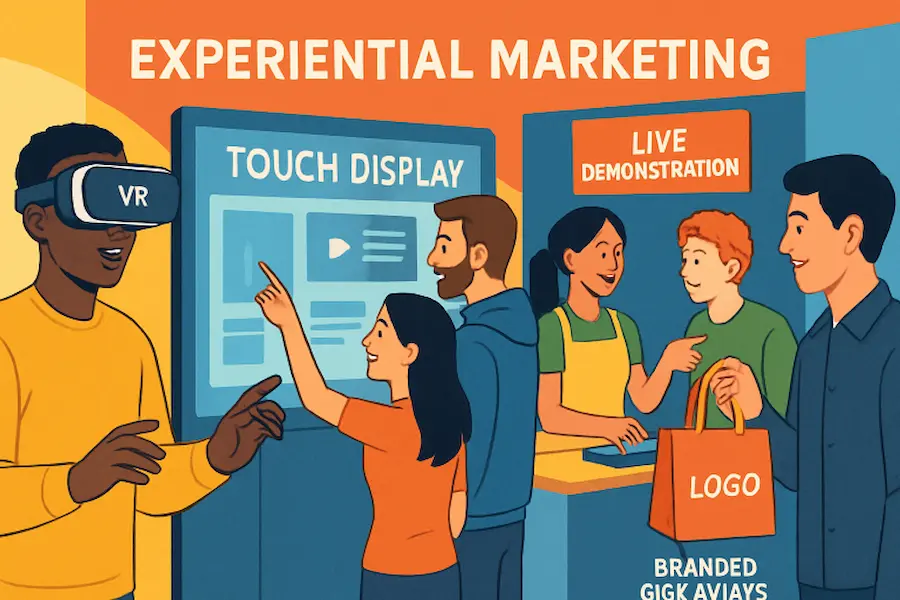
Event marketing refers to a strategic promotional approach in which brands create or sponsor in-person, virtual, or hybrid experiences to engage a target audience and build direct relationships. It is a measurable discipline that connects brand awareness, lead generation, and customer retention within a single live or digital environment. In the Canadian context, event marketing is widely recognized as one of the highest-ROI channels available to both emerging companies and established enterprises.
Why Event Marketing Matters More Than Ever in Canada
Canadian businesses are operating in a crowded digital landscape. Paid ads get skipped. Organic reach keeps shrinking. Email open rates are declining. Yet one channel continues to deliver outsized returns: event marketing.
When done right, events create something that digital ads alone cannot replicate — human connection at scale. Whether you are running a product launch in Toronto, a corporate summit in Vancouver, or a pop-up activation in Calgary, the core principle is the same: give your audience a reason to show up, engage, and convert.
According to research from Eventbrite, brands that use live experiences as part of their marketing mix report up to 74% higher customer loyalty than those that rely solely on digital advertising. That number alone should shift how Canadian businesses think about their marketing budgets.
Invade Marketing works with brands across Canada and internationally to design event-driven campaigns that do not just fill a room but deliver measurable pipeline impact. Their results speak clearly — 6,320% ROAS for BMW Canada Group and 3,150% ROAS for a Montreal-based fintech firm, both achieved through precisely built marketing systems that treated every event as a conversion opportunity.
What Makes Event Marketing Effective in Canada?
Canada’s geography, cultural diversity, and bilingual market create unique opportunities and challenges that most general marketing playbooks do not address. An event that performs well in a single city in the United States may need significant adaptation for audiences in Quebec, British Columbia, or the Prairie provinces.
Three factors separate high-performing event campaigns in Canada from average ones:
- Cultural relevance. Canadian audiences respond to brands that acknowledge local identity, whether that means incorporating French-language content in Quebec or highlighting sustainability values that resonate nationally.
- Multichannel amplification. An event without a digital amplification plan reaches only the people in the room. The most effective campaigns use paid social, SEO content, and email sequences to extend reach before, during, and after the event.
- Data capture at every touchpoint. Registration forms, on-site activations, post-event surveys, and retargeting pixels all feed into a data loop that improves the next campaign.
Types of Events Canadian Brands Use to Grow
In-Person Brand Activations
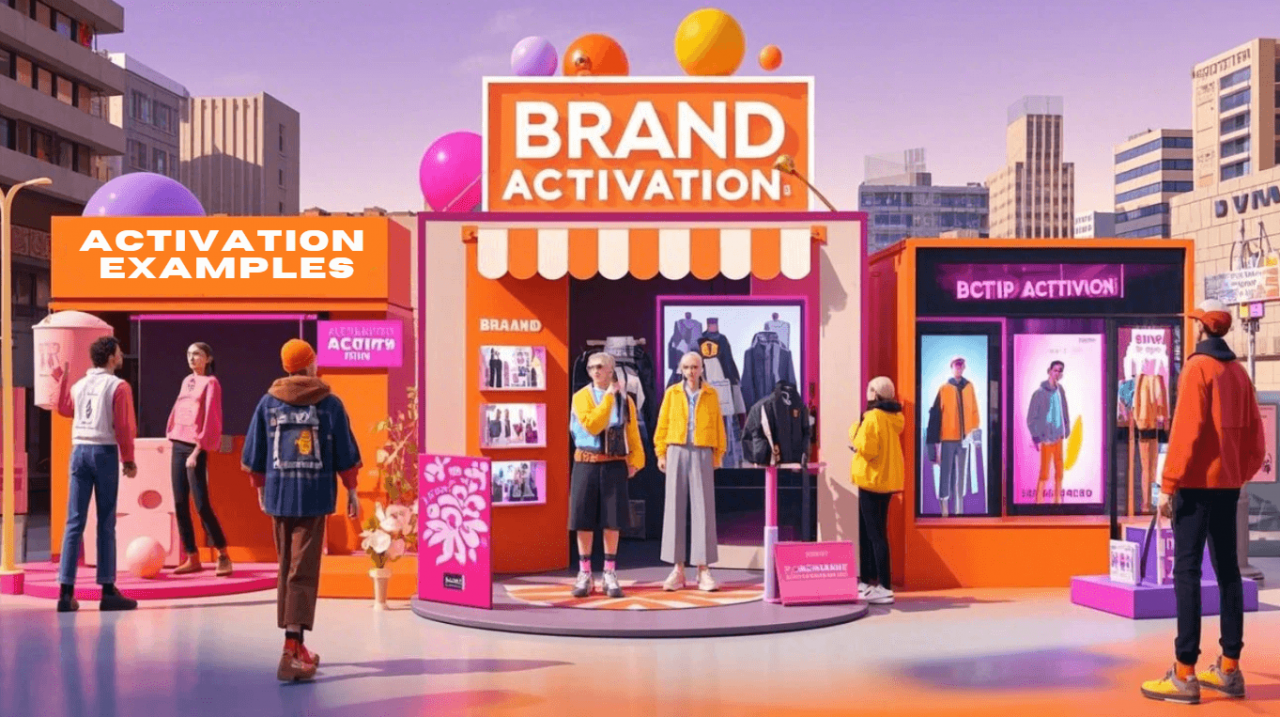
Brand activations are physical experiences designed to create an emotional connection between a consumer and a product or service. Pop-up installations, sampling events, guerrilla campaigns, and sponsored public experiences all fall into this category. They work exceptionally well in high-foot-traffic areas and produce strong social media content that extends their organic reach far beyond the physical audience.
Virtual and Hybrid Events
Canada’s vast geography makes fully in-person events inaccessible for a significant portion of any national audience. Virtual and hybrid formats solve this problem. A webinar, live-streamed product launch, or hybrid conference allows brands to simultaneously serve in-person attendees and remote participants across time zones, from Vancouver Island to St. John’s.
Businesses exploring top 10 content marketing strategies consistently rank virtual events among the most scalable ways to build thought leadership and grow an email list simultaneously.
Trade Shows and Corporate Conferences
B2B companies in Canada rely heavily on trade shows and industry conferences to generate warm leads. The key is preparation. Brands that arrive with a clearly defined offer, a well-designed booth experience, and a pre-scheduled meeting cadence consistently outperform those that show up and hope for foot traffic.
A Step-by-Step Event Marketing Strategy
Step 1: Define Goals and Measurable KPIs
Every event campaign should begin with a clear answer to one question: What does success look like? Common goals include lead volume, cost per acquisition, social impressions, and post-event sales conversions. Define these before spending a dollar.
Step 2: Build a Deep Audience Profile
Who is attending, and why do they care? Map out attendee demographics, pain points, and decision-making criteria. This profile should drive every creative, copy, and channel decision that follows.
Step 3: Choose the Right Promotion Channels
Not all channels perform equally for every event type. The table below outlines the strongest channels by event category based on current Canadian market data.
| Event Type | Top Channel 1 | Top Channel 2 | Top Channel 3 |
|---|---|---|---|
| Brand Activation | Instagram Ads | Influencer Outreach | Local SEO |
| Webinar or Virtual | Email Marketing | LinkedIn Ads | Google Search Ads |
| Trade Show | Google Display | Email Sequence | |
| Product Launch | Meta Ads | PR Outreach | YouTube Pre-Roll |
| Corporate Conference | Podcast Sponsorship | Google Ads |
For social ad execution, Instagram ad services built specifically for event promotion can dramatically lower cost per registration while increasing qualified attendee quality.
Step 4: Build Pre-Event Buzz
The weeks before your event determine attendance. A strong pre-event sequence includes:
- A teaser campaign launched four to six weeks out
- Early-bird registration incentives to drive urgency
- Speaker or special guest announcements on social channels
- A countdown email series to registered attendees
- Paid retargeting to website visitors who did not convert
Step 5: Execute and Capture Data
During the event itself, every interaction is a data point. Use QR codes at physical stations, track session attendance in virtual platforms, capture opt-ins at activation points, and document social mentions in real time. This data feeds directly into post-event remarketing campaigns.
Step 6: Post-Event Follow-Up
Most event leads go cold because of poor follow-up. A structured 72-hour post-event sequence should include a personalized thank-you email, a replay or content asset relevant to the attendee’s interests, and a clear next-step offer. This is where Google Ads retargeting adds significant value. Brands using Google Ads campaign management after events consistently report shorter sales cycles and higher close rates by staying visible to warm leads as they move through the decision stage.
How to Measure Event Marketing ROI
Return on investment is the metric that earns internal budget approval for future events. Measuring it accurately requires tracking both direct and indirect value.
Direct revenue metrics:
- Closed deals attributed to event leads
- On-site or post-event purchases
- Upsells driven by event engagement
Indirect value metrics:
- Social media reach and earned media value
- Email list growth from event registrations
- Brand search volume lift after the event
- Pipeline influenced (deals where event contact was a touchpoint)
A basic ROI formula: (Revenue Generated minus Total Event Cost) divided by Total Event Cost, multiplied by 100.
For complex multi-event campaigns, integrating a CRM with event tracking data provides a more accurate picture of long-term attributed revenue.
Common Event Marketing Mistakes to Avoid
Even experienced teams make avoidable errors that reduce event ROI. These are the most frequent issues:
- No post-event nurture sequence. Leads collected without a follow-up plan convert at a fraction of their potential.
- Relying on one channel for promotion. Single-channel campaigns consistently underperform multi-touch approaches.
- Ignoring mobile experience. Over 60% of event registrations in Canada are completed on mobile. Slow or poorly formatted registration pages lose attendees before they sign up.
- Skipping the data capture plan. Collecting first-party data at events is one of the most cost-effective ways to build a segmented marketing list.
- Not repurposing event content. Photos, videos, testimonials, and presentation decks are content assets that can fuel weeks of social and email campaigns.
Global agencies that operate across multiple markets, from a digital agency Utah to a full-service marketing agency Phuket, apply these same principles consistently because they hold across industries and geographies.
Frequently Asked Questions
What is event marketing and how does it work?
Event marketing refers to a strategy where brands use live or virtual experiences to promote products, build awareness, and generate leads. It works by creating a direct interaction between a brand and its audience, moving people from awareness to consideration faster than most passive digital formats.
How much does event marketing cost for a Canadian business?
Costs vary widely based on event type and scale. A local brand activation can start at a few thousand dollars, while a national hybrid conference with a paid promotion budget may reach six figures. The most important factor is not the budget size but how well each dollar is allocated across promotion, execution, and follow-up.
What is the best way to promote an event in Canada?
The most effective approach combines Meta and Instagram paid ads for awareness, email marketing for registration conversion, and Google retargeting to recover people who showed interest but did not register. Layering these channels typically produces 25 to 35% higher attendance than single-channel promotion.
How do I measure the success of an event marketing campaign?
Track both hard metrics (leads generated, revenue closed, cost per lead) and soft metrics (brand awareness lift, social reach, email list growth). Use UTM parameters on all promotional links and ensure your CRM attributes closed revenue back to the event source for accurate ROI calculation.
Can small businesses in Canada benefit from event marketing?
Yes. Local and small businesses often see stronger proportional returns from events than large brands because their audiences are more defined and easier to reach with a targeted message. Even a small, well-executed workshop or pop-up activation can build the kind of trust and visibility that months of digital advertising may not achieve.
Ready to Turn Your Next Event Into a Revenue Machine?
Your competitors are already using events to generate leads, build credibility, and close deals faster. The question is whether you are showing up with a strategy or just showing up.
Invade Marketing has delivered proven event-driven results for brands across Canada, Southeast Asia, and beyond. From paid media that fills seats to post-event campaigns that close pipeline, every element is built around measurable outcomes.
Book your free consultation today and get a clear, actionable plan for your next event marketing campaign — no commitment required.
Published by Invade Marketing | Canada’s Performance-Driven Digital Agency