
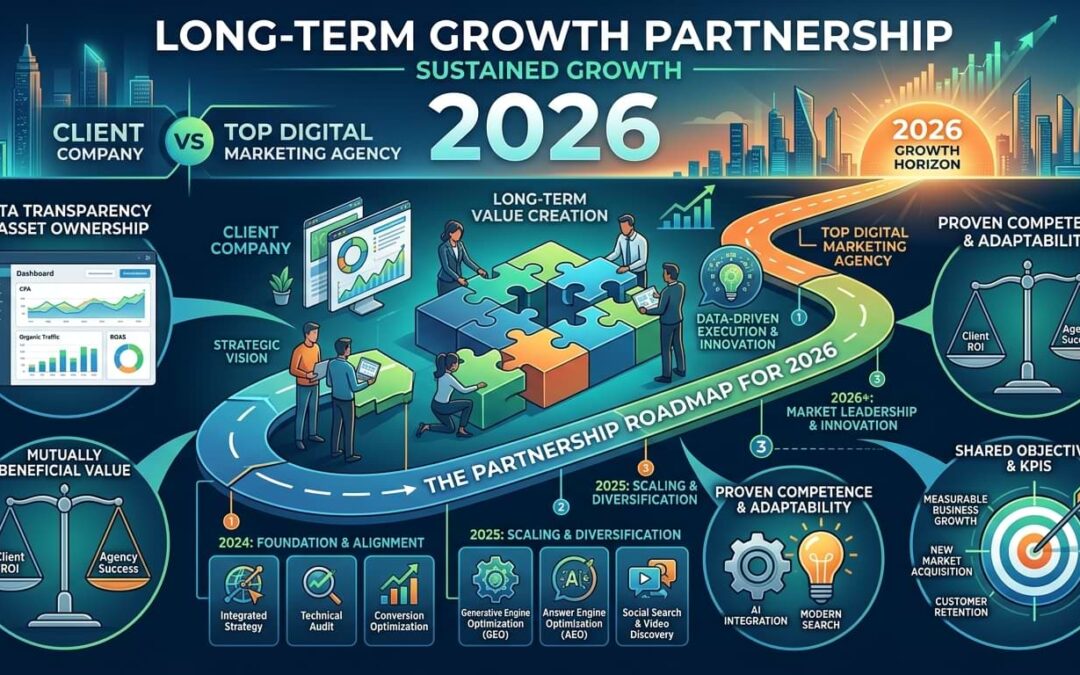
In the fast-moving world of online business, short-term campaigns can create temporary spikes. Yet lasting success rarely comes from one-off projects. Businesses that thrive look for top digital marketing agencies partnership long-term growth 2026 strategies that build momentum over months and years.
A true partnership turns an agency into an extension of your team. The agency learns your brand voice, audience behavior, and revenue goals deeply enough to anticipate needs instead of reacting to them. This approach compounds results: better targeting, stronger creative, lower acquisition costs, and more predictable revenue.
Digital marketing itself has evolved into a sophisticated mix of search, social, content, paid media, automation, and data analysis. According to the overview on digital marketing, these channels work best when coordinated over time rather than treated as isolated tactics. That coordination is exactly what a long-term partnership provides.
Why Long-Term Partnerships Outperform Short-Term Projects
When you start with a new agency, the first weeks or months are spent on onboarding. The team reviews your brand guidelines, studies past performance data, maps your customer journey, and tests early hypotheses. This learning curve is necessary, but it delays peak performance.
In a long-term relationship the learning curve flattens. By the six- or twelve-month mark the agency already understands which messages convert, which audiences respond, and which seasons matter most for your business. Campaigns start from a higher baseline instead of zero. Efficiency rises. Creative becomes sharper. Testing becomes more ambitious because trust exists on both sides.
Research and practitioner experience consistently show that results improve with relationship length. Early months focus on foundation work. Later months deliver compounding returns as insights accumulate and processes streamline. Shared knowledge reduces rework, shortens approval cycles, and allows the agency to reuse successful assets rather than reinvent them each quarter.
Long-term partners also bring continuity during market shifts. Algorithm updates, platform changes, and economic fluctuations happen regularly. An agency that already knows your business can pivot quickly without the delay of explaining context again.
Key Benefits of Choosing the Right Long-Term Digital Marketing Partner
Deeper brand understanding. The agency internalizes your values, tone, and customer language. Messaging stays consistent across channels and evolves naturally with your business.
Strategic cohesion. Instead of disconnected campaigns, every activity ladders up to larger business goals. SEO supports paid media. Content fuels email and social. Automation nurtures the leads those channels generate.
Cost efficiency over time. Onboarding costs are paid once. Thereafter, the same budget often produces stronger results because waste decreases and optimization accelerates. Preferential pricing or volume efficiencies sometimes appear in longer engagements as well.
Access to specialized expertise and tools. Most businesses cannot maintain full in-house teams for SEO, paid media, creative, analytics, and automation. A strong agency supplies that expertise plus technology that would be expensive to license alone.
Transparent, evolving measurement. Partners who stay with you refine attribution models, dashboards, and reporting so you always see the metrics that matter most to revenue, not just vanity numbers.
Innovation with accountability. Once trust is established, the agency can propose calculated experiments. Shared goals keep those experiments focused on outcomes rather than novelty.
These benefits explain why many successful brands treat their digital marketing agency as a strategic partner rather than a vendor. The relationship becomes a growth engine rather than a series of transactions.
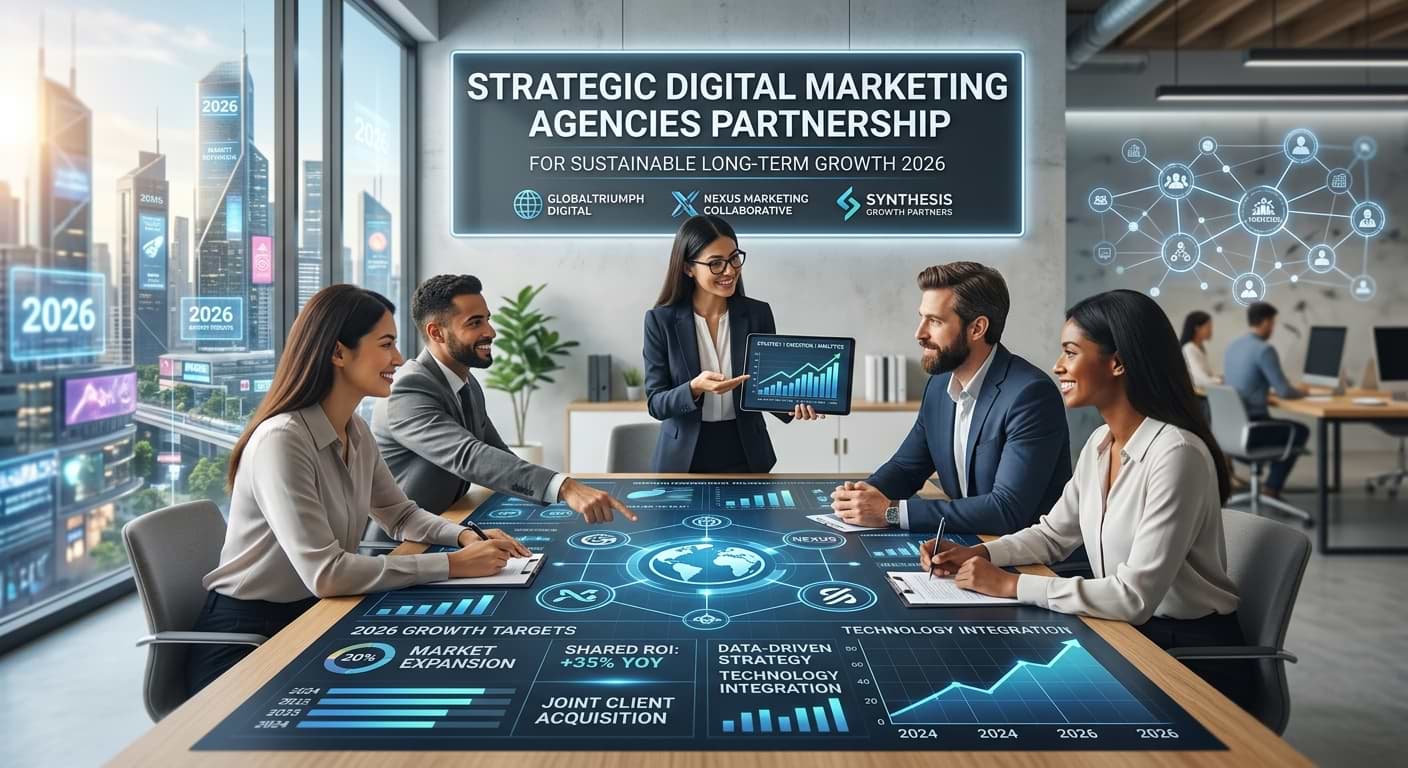
How to Identify Top Digital Marketing Agencies for Partnership in 2026
Selecting the right partner requires clear criteria. Look beyond polished proposals and focus on evidence of sustained client results.
Start with proven experience in your industry or similar business models. An agency that has scaled wellness brands, hospitality venues, ecommerce stores, or service businesses will understand the nuances of customer acquisition in those spaces.
Examine their approach to measurement. Do they tie activity to revenue and return on ad spend? Do they provide real-time or frequent transparent reporting? Can they explain how they attribute results across channels?
Assess cultural fit and communication style. Long-term success depends on open dialogue, shared priorities, and mutual respect. Ask how they handle feedback, disagreements, and changing priorities.
Review their process for strategy development. The strongest partners begin with discovery, set clear goals together, and create roadmaps that can adapt. They avoid rigid templates and instead tailor plans to your resources and timeline.
Consider technology and automation capabilities. In 2026, tools that qualify leads, personalize follow-up, and surface insights quickly give businesses a competitive edge. An agency that integrates these tools thoughtfully can free your team to focus on core operations.
Finally, evaluate their willingness to act as true partners. Do they ask thoughtful questions about your business challenges? Do they push back when a request may not serve your goals? Do they celebrate shared wins and own the learning from setbacks?
Building a Partnership That Delivers Sustainable Growth
Once you select an agency, invest in the relationship. Share accurate data, clear goals, and honest feedback. Establish regular check-ins that balance performance review with forward planning. Update objectives as your business evolves.
Define success in business terms—qualified leads, revenue contribution, customer lifetime value, or market share—rather than isolated channel metrics. This alignment keeps both sides focused on outcomes that matter.
Give the work time to mature. Digital channels, especially organic search and content, rarely deliver their full potential in the first few months. Patience combined with consistent optimization produces the strongest long-term results.
Maintain open communication. Share upcoming product launches, seasonal patterns, and competitive pressures so the agency can prepare. In return, expect proactive recommendations rather than passive execution.
When both sides treat the engagement as a partnership, the agency becomes an extension of your growth team. Strategy becomes more cohesive. Execution becomes faster. Results compound year after year.
The Role of Integrated Channels in Long-Term Success
Modern digital marketing rarely succeeds through a single channel. Search engine optimization builds lasting visibility. Paid media accelerates reach and testing. Content educates and nurtures. Email and automation convert interest into action. Social platforms create community and social proof.
A long-term partner coordinates these channels so insights from one inform the others. Audience data from paid campaigns improves organic targeting. High-performing content becomes the foundation for ads. Automation ensures no lead falls through the cracks.
This integrated approach creates a system rather than a collection of campaigns. The system grows more efficient and more resilient over time. That resilience is especially valuable in 2026, when platforms and consumer behavior continue to evolve quickly.
Practical Steps to Start Your Partnership Journey
Begin by clarifying your current challenges and growth ambitions. What does success look like in twelve or twenty-four months? Which metrics will indicate progress?
Gather recent performance data if available. Even imperfect data helps an agency understand your starting point.
Schedule conversations with potential partners. Use those discussions to evaluate not only expertise but also chemistry and communication style.
Once you choose a partner, treat the early months as foundation-building. Focus on shared understanding and process development. The stronger the foundation, the faster later results arrive.
Throughout the relationship, protect time for strategic discussions. Tactical execution is essential, yet the highest value often comes from collaborative thinking about the next phase of growth.
Summary Block
Partnering with top digital marketing agencies for long-term growth in 2026 is one of the most effective ways for businesses to achieve sustainable results. Short-term projects deliver temporary gains; lasting partnerships create compounding advantages through deeper brand knowledge, strategic cohesion, rising efficiency, and continuous optimization. By selecting an agency that prioritizes transparency, shared goals, and integrated channel work, companies gain a true growth partner rather than a temporary vendor. The investment of time and trust pays dividends in clearer strategy, stronger performance, and more predictable revenue over the years ahead.
Ready to explore how a long-term digital marketing partnership can support your growth? Visit the free consultation page and start the conversation today. A thoughtful discussion about your goals is the first step toward building the partnership that helps your business thrive.
Related Questions & Answers
1. Why is a long-term partnership better than switching agencies frequently?
Frequent switches reset the learning curve. Each new agency must relearn your brand, audience, and data. Long-term partners build on accumulated knowledge, so results improve and costs per result often decline over time.
2. How long should a business plan to work with a digital marketing agency?
Most experts recommend committing to at least twelve months, with the strongest results typically appearing in year two and beyond. The first months establish foundations; later months deliver compounding returns.
3. What should I look for when choosing a partner for 2026 growth?
Prioritize proven experience, transparent measurement tied to revenue, clear communication, industry understanding, and a willingness to act as a strategic partner rather than a pure service provider.
4. Can a long-term agency relationship actually reduce marketing costs?
Yes. Reduced onboarding, less rework, faster approvals, and more efficient campaigns often lower the cost of acquiring customers over time even if the monthly investment remains similar.
5. How do integrated channels contribute to long-term growth?
When SEO, paid media, content, social, and automation work together under one strategic plan, insights flow between channels. This creates a more resilient system that adapts faster and performs more efficiently than isolated tactics.