
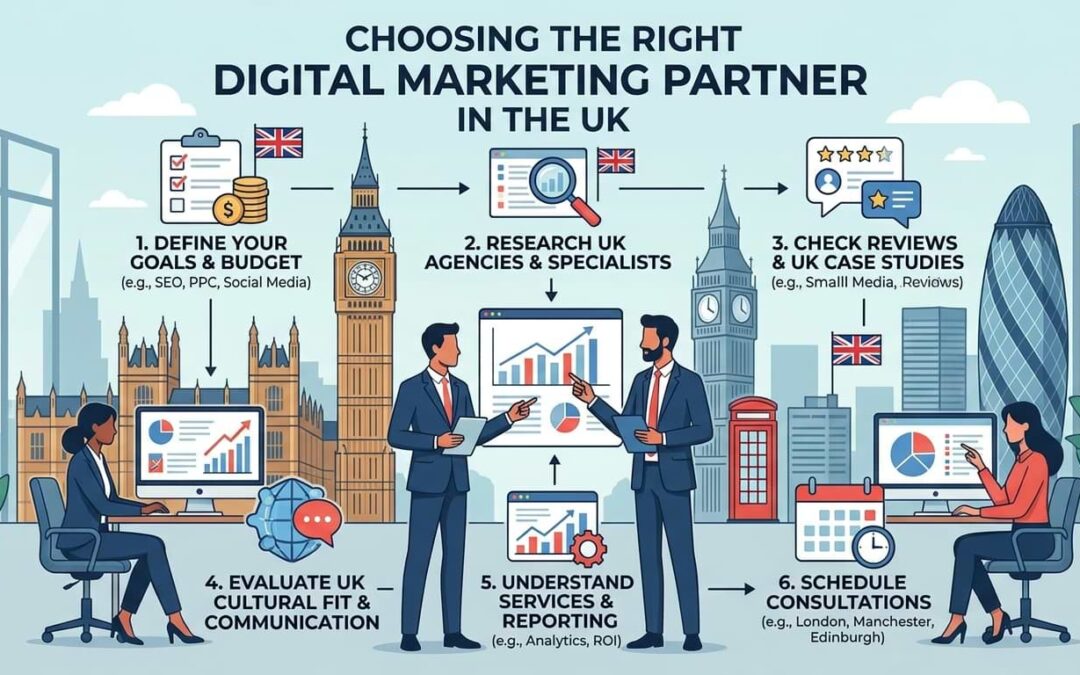
Choosing the right digital marketing partner can feel overwhelming for any small business owner in the UK. You already wear many hats—running operations, serving customers and keeping an eye on the bottom line. Adding the complexity of online growth strategies can make the decision even harder. Yet the right partner can free up your time, bring in consistent leads and help your business grow steadily without unnecessary risk.
This guide walks you through a clear, practical process. It focuses on what truly matters: measurable results, transparent communication and a genuine understanding of small-business realities. By the end, you will know exactly what questions to ask and which signals show you have found a reliable partner.
Why the Choice Matters More Than Ever
Digital marketing has become essential for UK small businesses. Customers research online before they buy, search engines shape first impressions, and paid channels can deliver leads quickly when managed well. According to Wikipedia’s overview of digital marketing, the field covers search engine optimisation, paid advertising, social media, email and more—tools that together help businesses reach the right people at the right time.
For small businesses, budgets are limited and every pound counts. A partner who treats your account as just another client can waste resources on vanity metrics such as impressions or likes. A partner who understands your constraints will focus on cost per lead, return on ad spend and actual revenue growth. The difference shows up in your bank balance within months.
Step 1: Clarify Your Own Goals First
Before you speak to any agency, write down what success looks like for your business. Be specific. Do you need more website enquiries? Bookings for a service? Online sales? Local footfall? Set a realistic timeframe—perhaps three or six months—and decide how you will measure progress.
Also note your current monthly marketing budget, including any ad spend. Knowing these numbers helps you evaluate proposals fairly and avoids conversations that go nowhere. Agencies that respect this preparation tend to be the ones worth working with.
Step 2: Look for Relevant Experience, Not Just Impressive Logos
Many agencies showcase big-brand work. That can look impressive, yet it rarely translates to small-business success. Ask for case studies from businesses similar to yours in size, sector or location. Look for clear before-and-after numbers: increases in leads, reductions in cost per acquisition, or revenue growth tied directly to campaigns.
Experience with UK small businesses matters because the market has its own nuances—local search behaviour, competition levels and typical budgets. A partner who has helped businesses like yours navigate those realities will move faster and waste less of your money testing ideas that do not fit.
Step 3: Demand Transparency on Strategy and Reporting
A good partner explains their approach in plain language. They should outline how they will use search, paid ads, content or automation to reach your goals. They should also tell you who will handle day-to-day work and how often you will receive updates.
Insist on transparent reporting. You need to see the numbers that matter—leads generated, cost per lead, conversion rates and revenue attributed to marketing—not just traffic graphs. Real-time or weekly dashboards are ideal. If an agency hesitates to share full access to your ad accounts or analytics, treat that as a warning sign. You should always own your data and accounts.
Step 4: Evaluate Communication and Cultural Fit
Marketing is a partnership. You will speak regularly, share feedback and make decisions together. During initial conversations, notice how the team listens. Do they ask thoughtful questions about your customers and challenges, or do they jump straight into a sales pitch?
Meet the people who will actually work on your account, not only the person who sells the contract. Clear, calm communication builds trust. You want a team that feels supportive and professional, not one that makes you feel rushed or talked down to.
Step 5: Compare Value, Not Just Price
The cheapest option is rarely the best. Extremely low fees often mean junior staff, limited hours or cookie-cutter strategies. At the same time, high fees do not guarantee results. Focus on value: what results can you reasonably expect for the investment, and how will progress be measured?
Ask about contract length and exit terms. Flexible arrangements with clear performance review points protect both sides. Avoid long lock-ins that leave you stuck if the relationship does not deliver.
Step 6: Check References and Real-World Proof
Request contact details for current or recent clients of a similar size. Speak to them about results, communication and whether they would recommend the agency. Independent reviews can also help, yet direct conversations give the most honest insight.
Look for consistency. An agency that delivers solid results for several small businesses over time is more reliable than one with a single standout campaign.
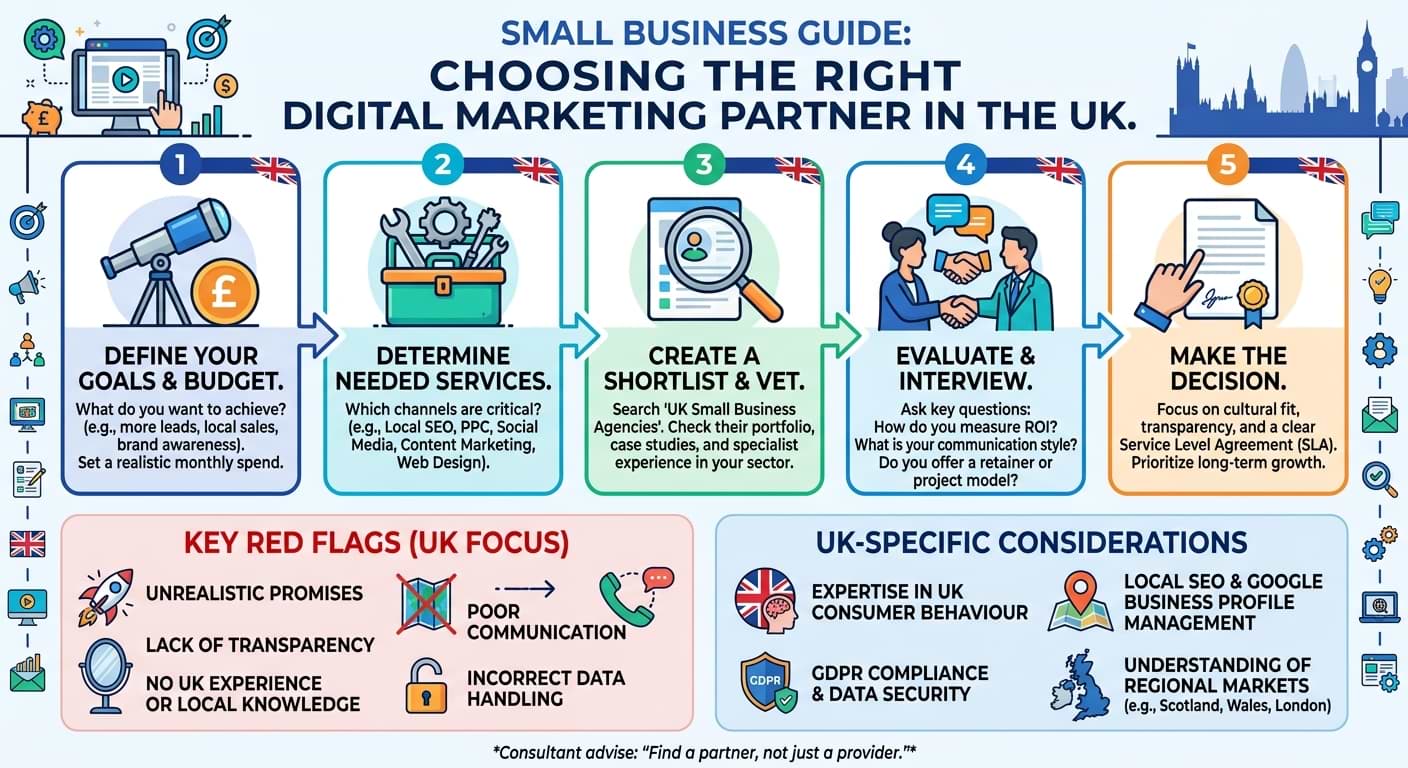
Common Red Flags to Watch For
- Vague promises without specific metrics
- Reluctance to share case studies or references
- Pressure to sign quickly
- Ownership of your ad accounts or website held by the agency
- Heavy focus on vanity metrics instead of revenue
- Junior staff handling strategy after senior people sold the work
If you notice several of these, continue looking.
Building a Productive Partnership Once You Choose
Once you select a partner, set clear expectations from day one. Agree on goals, reporting frequency, communication channels and decision-making processes. Share historical data, customer insights and any past campaign results. The more context you provide, the better the strategy can be tailored.
Review progress together regularly. Celebrate wins and address shortfalls openly. A strong partnership improves over time as both sides learn what works best for your audience.
Summary
Choosing the right digital marketing partner in the UK starts with clarity about your own goals and budget. Prioritise relevant small-business experience, transparent reporting, strong communication and proven results over flashy presentations or the lowest price. Ask detailed questions, check references and protect ownership of your data and accounts. When you find a partner who listens carefully, focuses on measurable growth and treats your business with respect, the relationship can become one of the most valuable investments you make.
Ready to explore whether a focused digital marketing partnership could support your growth? Book a free consultation to discuss your goals and see what a tailored approach might look like.
Related Questions & Answers
1. How long does it usually take to see results from a digital marketing partner?
Results vary by channel and starting point. Paid advertising can generate leads within weeks once campaigns are live and optimised. Search engine optimisation typically needs three to six months of consistent work before ranking improvements become clear. A good partner will set realistic milestones for each stage so you know what to expect.
2. Should a small business choose a specialist or a full-service digital marketing partner?
It depends on your needs. If you only require one channel, such as local SEO or paid search, a specialist can work well. Most growing small businesses benefit from a full-service partner who can coordinate several channels so they reinforce each other. Consistency across search, ads, website and follow-up usually produces stronger overall results.
3. What budget should a UK small business allocate to a digital marketing partner?
Budgets differ widely by goals and industry. Many small businesses start with a combination of agency fees and ad spend that feels manageable while still allowing meaningful testing. The key is ensuring the investment is tied to clear performance targets rather than open-ended activity. Discuss realistic expectations based on your revenue and growth aims during the first conversation.
4. How important is industry experience when choosing a partner?
Relevant experience helps, especially with understanding customer behaviour and typical conversion patterns in your sector. However, strong strategic thinking and a proven process often matter more than exact industry matches. Look for partners who have succeeded with businesses of similar size and complexity, even if the sector differs slightly.
5. What should I do if the partnership is not delivering results?
First, review the agreed goals and reporting data together. Open discussion often reveals whether the strategy needs adjustment or whether expectations were misaligned. If progress remains weak after reasonable time and optimisation efforts, most healthy partnerships allow for a clean exit. Clear contracts with review points make this process straightforward.