
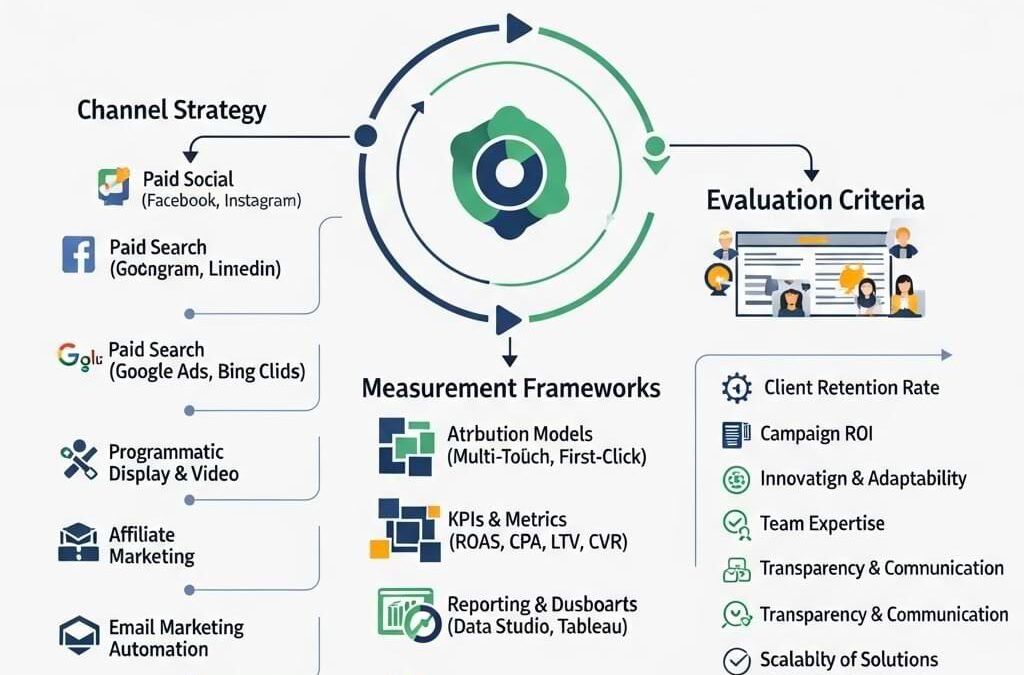
The best performance marketing agencies are specialized growth firms that utilize data-driven strategies and real-time analytics to deliver measurable returns on investment (ROI). These agencies focus on bottom-line results, such as lead generation and sales, by leveraging automated bidding systems and advanced attribution modeling to optimize digital spend across multiple platforms.
The Elite Guide to the Best Performance Marketing Agencies in 2026
The transition into 2026 has fundamentally redefined the relationship between brands and their growth partners. In an era where algorithmic volatility and Generative Engine Optimization (GEO) dictate market share, the demand for high-level accountability has never been higher. Navigating this landscape requires more than just a vendor; it requires an elite white label advertising agency that understands the intersection of human psychology and machine learning.
For businesses seeking to scale, the distinction between a traditional creative house and a performance-first firm is clear. Performance agencies do not just buy impressions; they engineer outcomes. By integrating first-party data with predictive AI, the leaders in this space are helping brands move from reactive spending to proactive revenue generation.
Why 2026 Demands a New Approach to Growth
The digital ecosystem is no longer a collection of isolated silos. Search, social, and retail media have merged into a unified experience where a user might discover a product via a conversational AI prompt and convert through a short-form video ad. Consequently, digital marketing USA strategies must be agile enough to follow these non-linear paths.
The best performance marketing agencies distinguish themselves by their ability to manage complex data ecosystems. As third-party cookies have effectively vanished, the reliance on server-side tracking and advanced CRM integrations has become the baseline for success.
Performance vs. Traditional Marketing Models
| Feature | Traditional Agency | Performance Agency |
| Primary Goal | Brand Awareness | Revenue & ROI |
| Pricing | Fixed Retainers | Performance-Based/Variable |
| Data Focus | Reach & Frequency | LTV, CPA, & ROAS |
| Optimization | Campaign-Based | Real-Time/Algorithmic |
| Reporting | Monthly Snapshots | Live Dashboards |
Critical Selection Criteria for High-Velocity Brands
When auditing potential partners, it is essential to look beyond the portfolio. While aesthetics matter, the underlying infrastructure of the agency determines the long-term viability of your campaigns. Elite firms often operate as a white label marketing partner, providing the technical backbone for complex global operations.
1. Outcome Accountability and Transparency
The hallmark of a top-tier firm is a willingness to tie fees to performance. This alignment of incentives ensures that the agency is as invested in your growth as you are. Transparency extends to reporting; you should have 24/7 access to raw data, allowing for a clear view of how every dollar is spent.
2. Full-Funnel Content Strategy
Growth is not just about the final click. The most effective content marketing agencies in USA now integrate performance metrics into every piece of creative. This “Performance Branding” approach ensures that even top-of-funnel awareness content is optimized for future retargeting and eventual conversion.
3. Technical Depth and AI Fluency
In 2026, an agency that is not using AI for predictive modeling is already behind. Look for partners that utilize proprietary technology to forecast customer lifetime value (LTV) and automate creative testing. This allows for thousands of variations to be tested simultaneously, identifying winning combinations in hours rather than weeks.
Industry Trends Shaping the Agency Landscape
According to the Competition and Markets Authority, digital advertising markets are increasingly focused on transparency and the ethical use of consumer data. Agencies that prioritize privacy-first frameworks not only protect their clients legally but also build greater trust with the end consumer.
The Rise of Multi-Platform Attribution
Users rarely convert after a single touchpoint. The best performance marketing agencies use sophisticated attribution models (such as Shapley Value or Markov Chain) to understand the weight each channel contributes to the final sale. This prevents over-investment in “last-click” channels that may actually be underperforming in the broader context.
-
Search Generative Experience (SGE): Optimizing for the answer, not just the link.
-
Retail Media Networks: Direct integration with commerce platforms to shorten the funnel.
-
Influencer-Led Performance: Using creator content as high-converting ad creative.
For firms managing a diverse portfolio of clients, leveraging the best marketing agency in USA expertise can provide a significant competitive advantage in these specialized areas.
Maximizing ROI Through Specialized Verticals
While many agencies claim to be generalists, the most successful partnerships often come from those with deep vertical expertise. For instance, the strategies required for best app marketing agencies—which focus heavily on retention and in-app events—differ significantly from the lead-generation tactics used in B2B professional services.
Key Pillars of a Performance Campaign
Audience Intelligence: Moving beyond demographics to intent-based segments.
Creative Velocity: Rapid production of high-quality assets to combat ad fatigue.
Conversion Rate Optimization (CRO): Ensuring the landing experience is as frictionless as the ad itself.
Retention Loops: Utilizing first-party data to drive repeat purchases and referrals.
Frequently Asked Questions (FAQ)
What is the typical fee structure for performance marketing agencies?
Most elite agencies use a hybrid model consisting of a base management fee plus a percentage of ad spend or a performance bonus based on meeting specific KPI targets like ROAS or CPA. This ensures the agency is incentivized to maximize your efficiency and scale.
How do performance agencies handle data privacy in 2026?
Top firms utilize privacy-enhancing technologies and clean rooms to process data without exposing personally identifiable information (PII). They focus on first-party data collection and server-side tracking to maintain accuracy while remaining fully compliant with global regulations.
Can performance marketing work for long-cycle B2B sales?
Yes, but the metrics shift. Instead of immediate sales, the focus is on “marketing-qualified leads” (MQLs) and “sales-qualified leads” (SQLs). Agencies use lead scoring and nurture sequences to track the performance of campaigns across long gestation periods.
How long does it take to see results with a new agency?
While initial optimizations can happen within the first 30 days, a true performance baseline usually requires 60 to 90 days of data. This allows the agency’s algorithms and human strategists to test, learn, and iterate toward a stable, scalable ROI.
What is the difference between SEO and Performance Marketing?
While SEO is a component of performance marketing, the latter is an umbrella term that includes paid search, social ads, programmatic, and affiliate marketing. Performance marketing is defined by its focus on measurable, transactional outcomes rather than just organic visibility.
Conclusion: Partnering for Scalable Success
The search for the best performance marketing agencies is ultimately a search for a partner that can navigate the complexities of modern commerce with precision and integrity. By focusing on data-driven decision-making and a full-funnel approach, brands can secure their position in an increasingly competitive digital marketplace.
To see how an integrated growth strategy can transform your business, you can schedule a free consultation with the team at Invade Marketing. Whether you are looking for a global strategy or a white label marketing partner, the focus remains on delivering the results that matter most to your bottom line.