
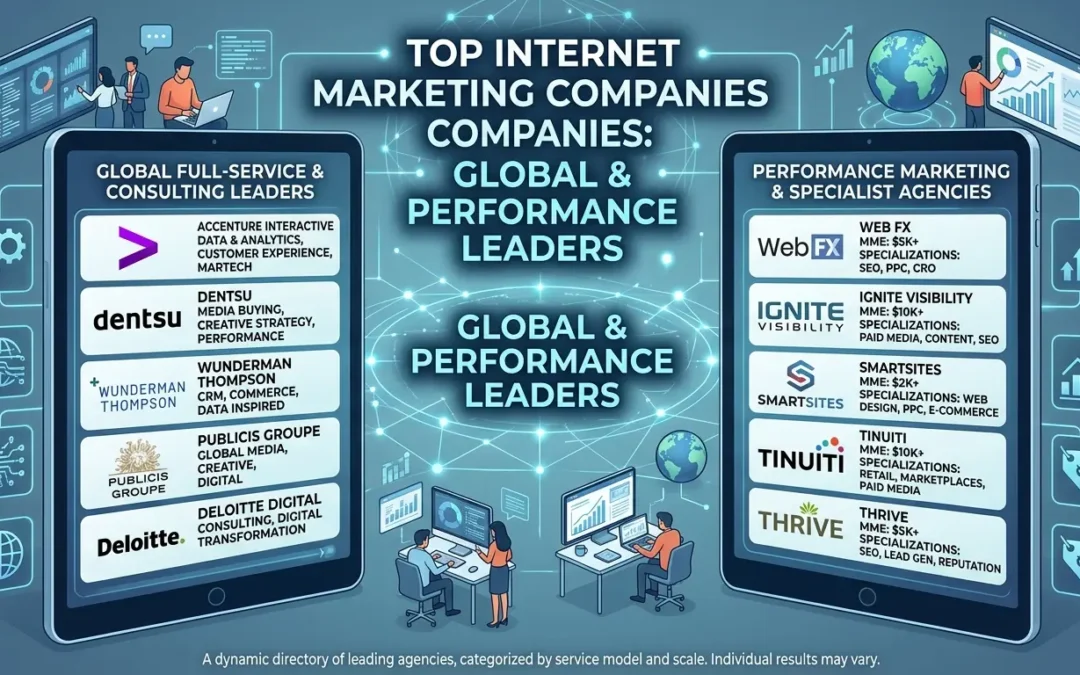
Finding the right partner for your online growth can feel overwhelming. There are countless options, each promising stronger visibility, more leads, and better returns. Yet the difference between an average provider and one of the best internet marketing companies often comes down to clarity, alignment, and measurable outcomes rather than flashy claims.
This guide walks you through a practical, thoughtful process for evaluating potential partners. It focuses on what actually matters for long-term success so you can make a confident decision that supports your goals.
Understanding Internet Marketing and Why the Right Partner Matters
Internet marketing (also widely called digital marketing) uses online channels to reach and engage audiences, build awareness, generate leads, and drive sales. It includes search engine optimization, paid search, content creation, social media, email, and conversion-focused website work. As described on Wikipedia’s page on digital marketing, these approaches rely on digital technologies and platforms to promote products and services in ways that traditional methods alone cannot match.
When done well, internet marketing creates steady visibility and measurable growth. When handled poorly, budgets disappear with little to show for them. That is why selecting carefully among the best internet marketing companies is so important. The right partner becomes an extension of your team. They understand your audience, respect your brand voice, and focus on results that connect to real business outcomes.
A strong partner helps you avoid common pitfalls such as chasing vanity metrics, spreading efforts too thin across too many channels, or relying on tactics that stop working the moment algorithms change. Instead, they build sustainable systems that continue delivering value.
What Sets the Best Internet Marketing Companies Apart
Not every agency that offers online services belongs in the top tier. The strongest ones share several clear qualities.
They begin with listening. Before recommending tactics, they invest time understanding your business model, target customers, competitive landscape, and current challenges. This foundation shapes every recommendation that follows.
They demonstrate relevant experience. Case studies and examples should reflect situations similar to yours in industry, company size, or growth stage. Results should be specific and tied to meaningful metrics such as qualified leads, revenue contribution, or improved conversion rates rather than vague traffic increases.
Transparency is non-negotiable. The best internet marketing companies explain their process, pricing structure, expected timelines, and reporting methods in plain language. You always know what is being done, why it is being done, and how progress is measured.
They combine strategy with execution. Strategy without follow-through produces little. Execution without strategy wastes resources. Top partners balance both and adjust based on data rather than rigid plans.
Finally, they prioritize education and collaboration. You should feel informed and involved rather than left in the dark. Regular communication, clear explanations of performance, and joint planning sessions are standard.
These traits create partnerships built on trust and shared accountability.

A Practical Framework for Evaluating Potential Partners
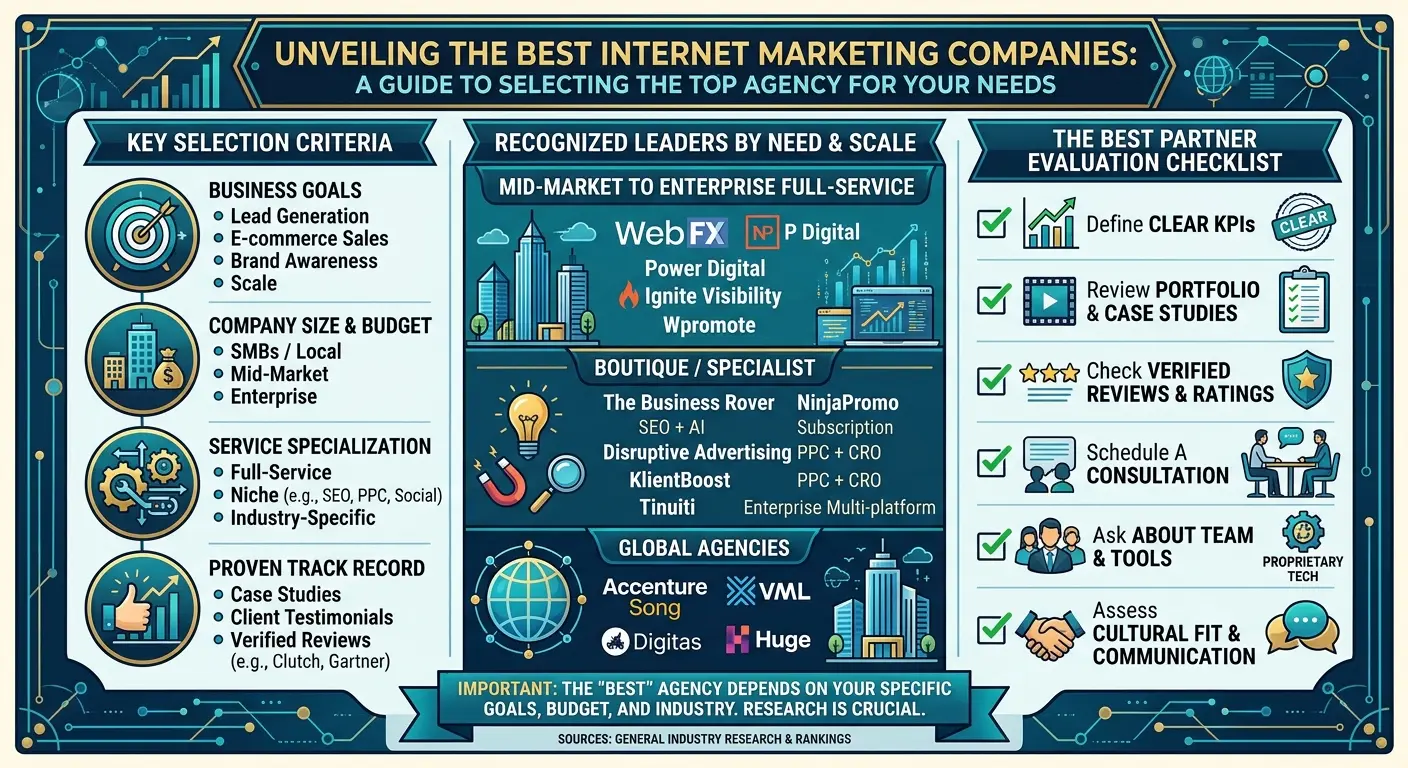
Start by clarifying your own needs. Write down specific goals: more qualified leads from organic search, higher conversion rates on key pages, stronger local visibility, or consistent content that positions your brand as helpful and authoritative. Note your approximate budget range and preferred communication style. This internal clarity makes external evaluation far more effective.
Next, shortlist three to five candidates. Look for agencies whose websites and materials show thoughtful content rather than pure sales language. Review any available case studies or client feedback for evidence of sustained results.
When you speak with each team, ask consistent questions:
- How do you typically approach a business in our situation?
- Who will handle the day-to-day work, and how senior is that team?
- What does reporting look like, and how often will we review progress together?
- How do you handle changes in strategy when data suggests a better path?
- What does success look like in the first 90 days and beyond?
Pay attention to how they answer. Do they listen carefully and ask clarifying questions of their own, or do they move quickly into a standard pitch? The quality of the conversation often predicts the quality of the working relationship.
Request references or examples of work that closely match your needs. When possible, speak with a current or past client about communication, responsiveness, and actual outcomes.
Compare proposals side by side. Look for clear scope, realistic timelines, defined deliverables, and transparent pricing. Vague language or overly optimistic guarantees are warning signs.
Common Mistakes to Avoid When Choosing
Many businesses select based on price alone or on the most polished presentation. The lowest cost option frequently delivers limited strategy and junior-level execution. The most impressive pitch may prioritize closing the deal over long-term fit.
Another frequent error is expecting immediate dramatic results. Sustainable internet marketing compounds over time. Partners who promise rapid ranking dominance or instant lead floods often rely on short-term tactics that create later problems.
Avoid agencies that cannot explain their process in simple terms or that resist sharing detailed reporting. You should never feel you need a translator to understand how your budget is being used.
Finally, do not overlook cultural and communication fit. Even strong technical skills fall short if the working relationship feels strained or one-sided.
The Real Benefits of Working with a Strong Partner
When you choose well, several advantages become clear. You gain specialized expertise without the overhead of building a full in-house team. Your internal resources stay focused on core operations while marketing systems run consistently in the background.
Data-driven decisions replace guesswork. You receive clear insights into what is working, what is not, and where to adjust. Over time, this creates a more efficient and effective marketing engine.
Brand consistency improves. Messaging, visual presentation, and customer experience align across channels. Prospects encounter a coherent and professional presence at every touchpoint.
Most importantly, growth becomes more predictable. Instead of sporadic campaigns, you develop ongoing systems that attract, nurture, and convert the right audience.
These outcomes are what separate average providers from the best internet marketing companies.
Summary
Selecting among the best internet marketing companies requires clarity about your goals, careful evaluation of experience and transparency, and attention to communication and cultural fit. Focus on partners who listen first, demonstrate relevant results, explain their approach clearly, and measure success against business outcomes rather than isolated metrics.
A thoughtful process reduces risk and increases the likelihood of a productive, lasting relationship. When the partnership works, internet marketing stops feeling like an expense and starts functioning as a reliable growth system.
If you are ready to explore how a dedicated team can support your specific objectives, we invite you to start a conversation.
Frequently Asked Questions
What should I look for first when evaluating internet marketing companies?
Begin with clarity on your own goals and budget. Then examine whether the agency has relevant experience, transparent processes, and a track record of measurable results that connect to business outcomes.
How long does it usually take to see meaningful results?
Timelines vary by channel and starting point. Organic search efforts often show compounding progress over several months, while paid campaigns can generate earlier data. A good partner sets realistic expectations and reports progress against agreed milestones.
Is it better to work with a full-service agency or a specialist?
It depends on your needs. Full-service partners can coordinate multiple channels under one strategy. Specialists may deliver deeper expertise in a single area. Many businesses benefit from a partner strong enough to handle core needs while remaining flexible.
What questions should I ask during initial conversations?
Ask how they approach businesses similar to yours, who will do the actual work, how reporting works, and how they adjust strategy based on performance data. Listen for clear, thoughtful answers rather than generic promises.
How do the best partners handle communication and reporting?
They establish a regular cadence of updates, use straightforward language, share relevant data, and invite discussion. You should always understand current status and next steps without needing technical translation.
Ready to take the next step with a partner focused on clear strategy and real results? Schedule a free consultation. We are happy to listen to your goals and share how we can help.